

A Stretching Adventure
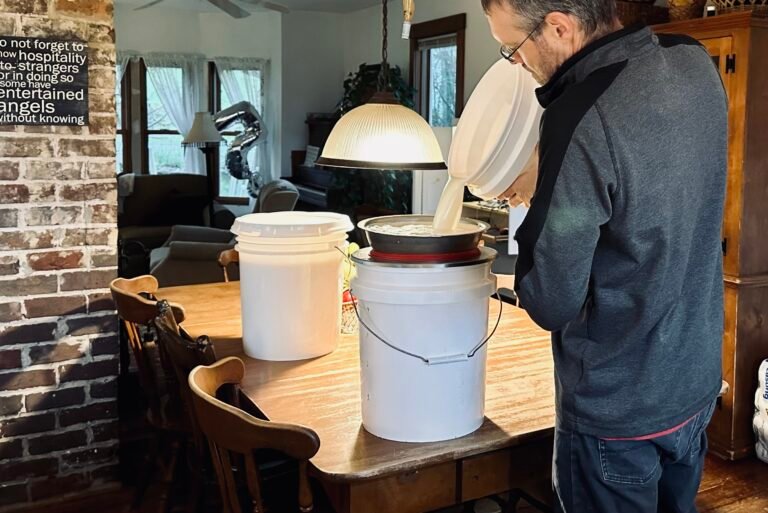
Last week I had to be at work early, so I left instructions for my husband to dump the 8 gallons of fresh milk into the cheese pot along with a pint of clabber. It’d get an extra long acidification, but I’d be home early afternoon and would turn it into some sort of cheese then.
When I arrived home, the milk had been acidifying for about five hours. I added the rennet (I’d decided to make an Asiago), but when it came time to cut the curds, they felt weird: floppy-wet, light, and stringy –
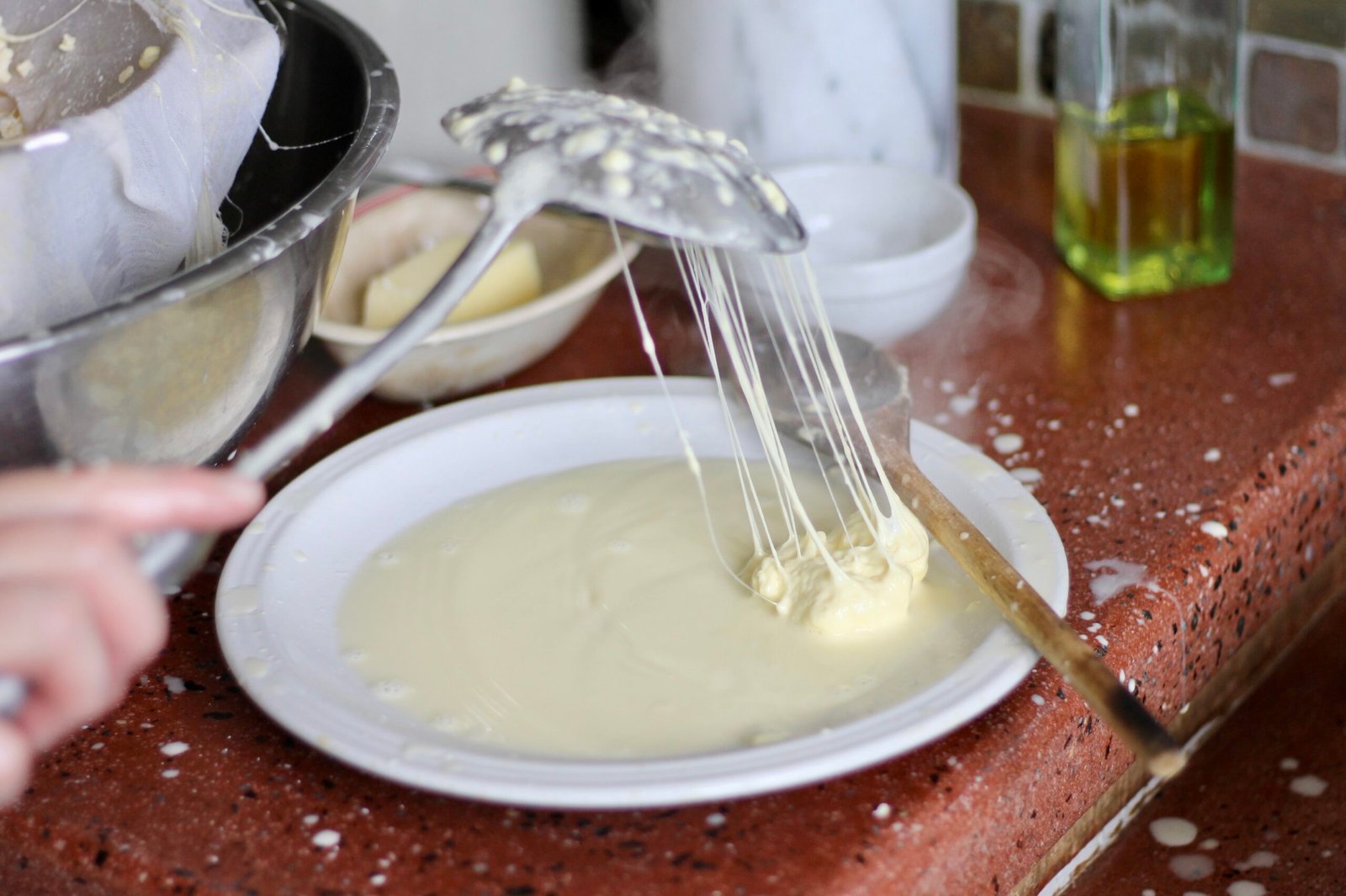
Stringy! And that’s when it hit me. I’d just made slow-cultured mozzarella!

I promptly changed course, heating a bit of lightly-salted water to just below boiling. Working in batches, I strained the curd (it released moisture super fast) and crumbed handfuls of it into the hot water. After letting it steep for a minute or so, I scooped out the curds and dumped them onto a plate.


At that point I stretched the curds, formed the cheese into a ball, and then placed it in a bowl of ice water to chill.

The cheese is flavorful and strong – cultured! Eaten fresh, it has a more pasty-soft texture (less elasticky like a more typical fresh mozz), and it melts beautifully when cooked.
All told, I got over 7 pounds of fresh mozzarella. I also made ricotta from four gallons of the whey (it was unusually finely textured, so I had to skim off the top and then strain it in a bag) which yielded 2 pounds of the creamiest ricotta EVER.

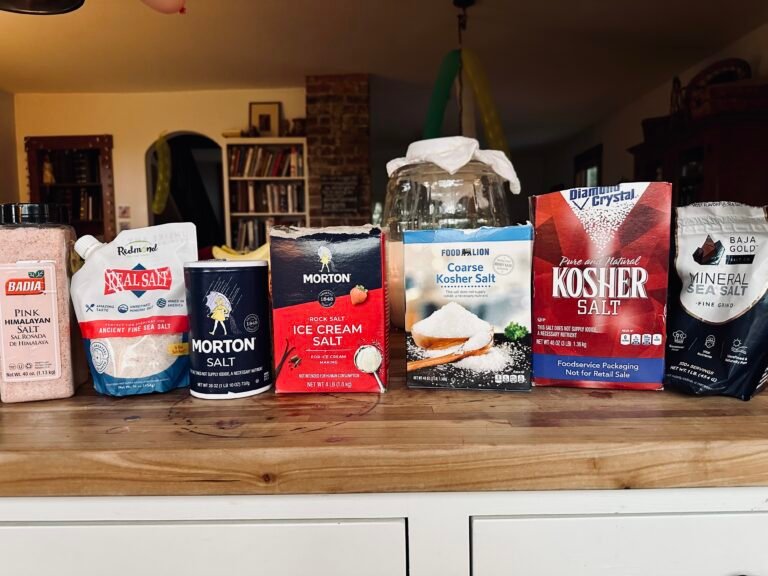
Jennifer, I would love to do this like you did. I’m making a clabber as we speak and I’d love to use it for this. I think I can follow what you did except for the salt. What do you mean by lightly salted please? I’m such a neophyte. Sorry. Could you do another one of these and video it? It would be awesome to see what you describe. That’s the way I learn best. I have yet to make a rennet cheese. If so much like this to be the first one! Thank you so much!
In that case, “lightly salted” meant I just tossed some salt into the water, probably as I would if I was going to be cooking pasta — maybe a little more. You want the water to be noticeably salty so that the salt absorbs into the cheese when you swirl it in the water. I hope that helps!