-

One of my YouTube viewers sent his handmade Dutch Press to try. Turns out, I absolutely LOVE it. It has steady pressure and the ability to press at much higher pressure than my spring-loaded press, making this a good one for cheddars. The press is very lightweight, uncomplicated, and simple to handle.
UPDATE: those handmade presses appear to no longer be in production, so I’ve switched to sharing an Amazon link to a similar type of Dutch press. It’s not as pretty, unfortunately, but it should get the job done just fine!
-
Because this is a spring-loaded press, the pounds of pressure are more a guide than an actual indicator of pressure. As the cheese presses, especially in the beginning, the pressure lessens, so periodically you have to re-press/tighten the pressure.
My mother-in-law gave me this press about 15 years ago, and I have used it heavily –VERY heavily – for the last three. The only issue I’ve had is that one of the metal bars became loose but my husband was easily able to simply tighten it back up.
This press is not capable of heavy pressure above 80 pounds so cheddars are rarely able to get a smooth rind.
-
This is my main all-purpose mold. While it’s capable of holding the curds from 8 gallons of milk, the curds often don’t fit in the mold at the start of pressing, so I extend its height by creating a collar using plastic mesh sheeting.
-
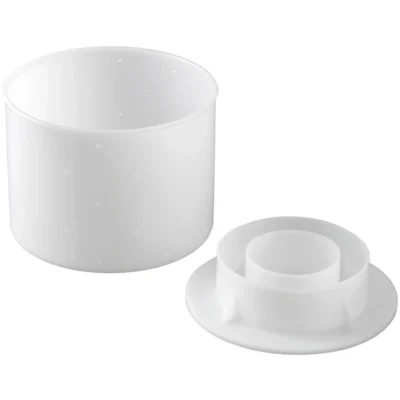
I have several of this in varying heights. If I had it to do over again, I’d get 6-8 of them in the same size so I could make uniform batches of Camembert. (Variations in cheese size make salting them a headache.)
-
To extend the height of my mold and allow it to accommodate more curds, I insert two pieces of this mesh into the mold before lining the mold and mesh with cheesecloth. Once the curds have sunk to the level of the mold (a little hand-pressing is sometimes necessary), I remove the collar and proceed as normal. This allows me to be more efficient in my cheesemaking by using more milk in a recipe (usually 8 gallons).
This plastic mesh can also be cut down to size with a kitchen scissors and then used as cheese mats or to hold pieces of floating feta under the brine.
-
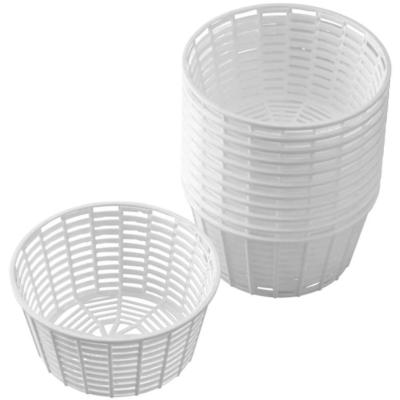
I do not have this specific product; I have an assortment of various-sized baskets. However, I’m linking to this pack of 12 because, when it comes to salting, wrapping, and aging cheese, the convenience of uniformity is a game changer. This clutch of baskets can be used for both draining ricotta and making Camembert (and probably for some other kinds of cheese that are skipping my mind at the moment).
-
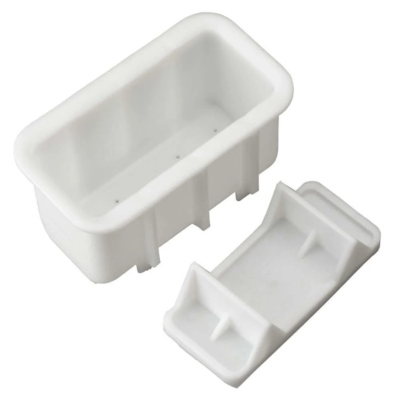
Perfect for turning 4 gallons of milk into a gorgeous rectangle of Brick cheese, Feta, or blocks of melty American cheese. Very thick and durable material.
-
I have three of these molds and use them to make Munster cheese; I divided curds from 8 gallons of milk between three molds. (They’d also work really well for Bries, I think.) The molds can stack inside, or on top, of each other to create a “mold press”, or you can stack two different cheeses on top of each other in the same press. They are durable.
-
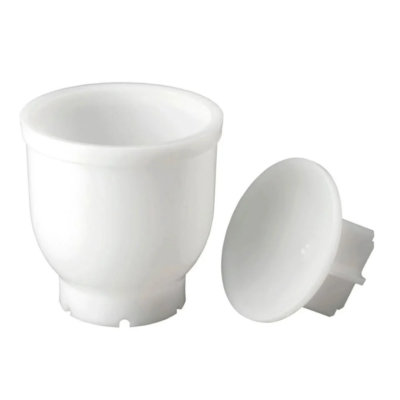
These molds are for making Goudas and Edams. You can just as easily use whatever shape you have, but there’s something jolly about making your very own cheese moon. I have an 8-gallon mold, but since that one is out of stock, I’m linking to the 4-gallon one. They also have 1-pound molds.