

The Butter Battle
Making butter is a real chore. Hand cranking is for the birds, and a blender is slow going (the blender turns cream into butter in 5 minutes or less, but it requires constant tending, multiple batches, and is brutally loud), so for a couple years now, I’ve been pestering my husband to fashion me a homemade electric churn. The goal: something quiet, big enough to handle 1-2 gallons of cream, and, most importantly, hands off.

It wasn’t a pressing problem though, since I don’t regularly make butter (we drink full-fat milk and I prefer cheeses that have a high fat content), but now that we are milking three cows and I’ve taken to skimming milk several times a week for cream cheese, ice cream, and butter, the Lack of a Good Butter Churn Problem, like thick cream, has risen to the top (pun intended).
So I got smart. I started making butter while my husband was in the kitchen straining milk because nothing says We Have a Problem better than 45 minutes of a screaming blender first thing in the morning.

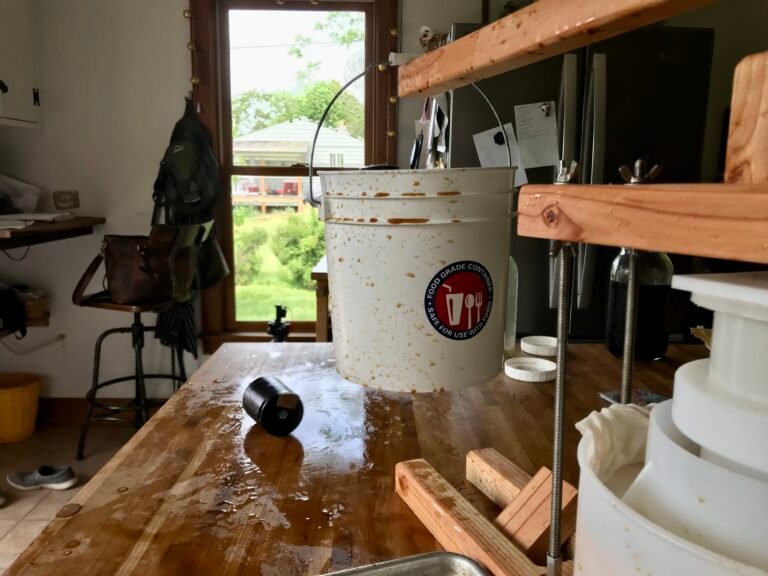
A few rounds of that and we suddenly had Prototype A: an attic fan motor, a stainless steel mixer, and a 5-gallon bucket.

It wasn’t perfect. He had to hold the lid on the bucket with his feet, and the motor overheated so he had to hold a fan over the motor, which meant it wasn’t exactly hands-off. Plus, after waiting for more than an hour, we still didn’t have butter, so I had to finish it in the blender.

Then he found one of those old butter motor thingies on Facebook marketplace for thirty dollars (Dixie Maid brand), and drove out into the boonies on a Friday night to pick it up. He fastened it to a lid which we set back on the 5-gallon bucket.

This one worked like a dream: completely hands off and sooooo quiet, but an hour later and we still didn’t have butter — my husband thinks it’s because the blade wasn’t quite low enough in the bucket — but a brief whirl with the immersion blender and, ta-da, butter!, so it wasn’t all for naught.
Now we’re on the hunt for a 3-gallon glass jar with curved sides and a lid to fasten the motor to because I’d really like to be able to see what’s happening inside as the butter’s being made, and a glass jar is easier on the eye, too. Or maybe my husband will alter a bucket so it better fits the churn? We’ll see.
But here’s my main question: with the recent rash of homesteaders, why isn’t there more efficient, affordable, and accessible equipment for making butter? It seems like there’d be a huge market for it. Am I missing something?
Anyway, the butter battle isn’t over yet. We’re gonna triumph . . . one of these days.